
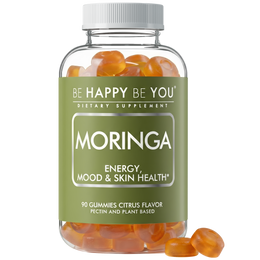
Gummy Science
Are Gummy Vitamins Halal or Kosher? What Certification Covers
Pectin gummies skip gelatin, the usual halal or kosher concern, but certification covers the whole product. We hold neither. How to check any brand's...
A gummy is vegan when the base is pectin instead of gelatin, and when nothing else in the recipe comes from an animal. That second part is where most gummies quietly fail. Coatings like beeswax and carnauba wax, colorants like carmine, and even the vitamin D3 in a multivitamin can trace back to a bee, an insect, or an animal byproduct. Pectin solves the base. It does not automatically solve the rest of the label.
Quick facts
Gelatin is the traditional gummy base, and it is animal from the start. The FDA's own definition is blunt about it. In its rule on prohibited cattle materials, the FDA defines gelatin as "a product that has been obtained by the partial hydrolysis of collagen derived from hides, connective tissue, and/or bone of cattle and swine" (21 CFR 189.5(a)(8)). That is cow and pig, every time.
Pectin is different. It is a fiber pulled from fruit, usually citrus peel or apple pomace, and the FDA describes exactly how: "Pectin is produced commercially by extracting citrus peel, apple pomace, or beet pulp with hot dilute acid" (21 CFR 184.1588). No animal involved. Every gummy we make, including the ones that are not vegan for other reasons, uses a pectin base rather than gelatin. If you want the full explanation of what pectin is and why it gels, we cover that separately in what pectin is.
Once the base is settled, the rest of the ingredient list still needs a look. Here is what to search for, in plain language, with the government source behind each one.
| Word on the label | Where it comes from | What the source says |
|---|---|---|
| Gelatin | Animal (cattle or swine) | "Obtained by the partial hydrolysis of collagen derived from hides, connective tissue, and/or bone of cattle and swine." (FDA, 21 CFR 189.5) |
| Beeswax | Animal (honey bees) | "A secretory product of honey bees used as a structural material in honeycombs." (FDA, 21 CFR 184.1973) |
| Carmine, cochineal extract | Animal (insect) | Made by extraction "of cochineal (Dactylopius coccus costa)," a scale insect. (FDA, 21 CFR 73.100) |
| Shellac, confectioner's glaze | Animal (insect) | Listed as "GUM LAC" / "LAC RESIN" in the FDA's food substances database, a resin secreted by the lac insect. (FDA Substances Added to Food) |
| Vitamin D3, cholecalciferol | Usually animal-derived | "Occurs in, and is isolated from, fish liver oils," or made "by ultraviolet irradiation of 7-dehydrocholesterol produced from cholesterol." (FDA, 21 CFR 184.1950) |
| Pectin | Plant (fruit) | "Produced commercially by extracting citrus peel, apple pomace, or beet pulp with hot dilute acid." (FDA, 21 CFR 184.1588) |
| Carnauba wax | Plant (palm leaf) | "Obtained from the leaves and buds of the Brazilian wax palm Copernicia cerifera Martius." (FDA, 21 CFR 184.1978) |
This is the one people miss most. A gummy can be pectin-based, sugar-coated with plant carnauba wax instead of beeswax, and still not be vegan because of the vitamin D inside it. Cholecalciferol, the form usually labeled vitamin D3, is what the FDA describes as coming from fish liver oil or from cholesterol, which is an animal source (21 CFR 184.1950, quoted above). The plant-friendly alternative is vitamin D2, ergocalciferol, which the same rule says is "produced by ultraviolet irradiation of ergosterol isolated from yeast and related fungi," not an animal at all.
So two vitamins that sound almost identical on a label, D2 and D3, can have completely different origins. If a brand does not say which one it used, or does not say where its D3 came from, "vegan" is a claim you cannot verify from the label alone.
We built every gummy we sell on a pectin base on purpose. Every gummy we sell is vegan, with one exception.
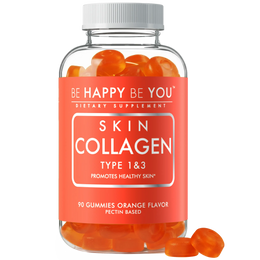
Our Collagen gummy is not vegan. It cannot be. Collagen itself is an animal protein, and ours is bovine, meaning it comes from cattle. The pectin base is still there, but the active ingredient is animal by definition, so we say that clearly rather than let "pectin-based" imply something it does not.
Vitamin D3 is the one place we would tell you to slow down on any brand. Cholecalciferol can trace to an animal source, and unless a brand states where its D3 came from, the word vegan on the front is not verifiable from the label.
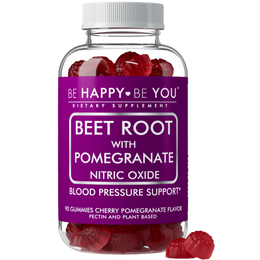
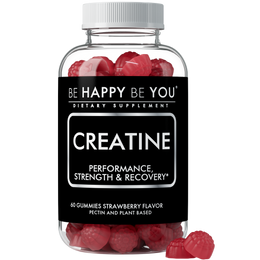
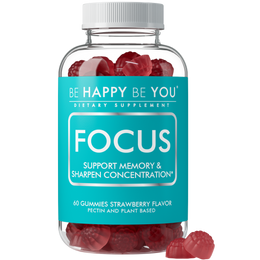
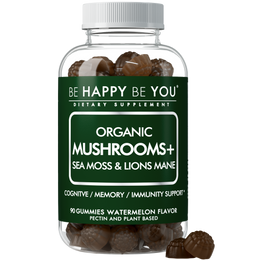
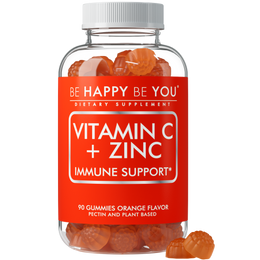
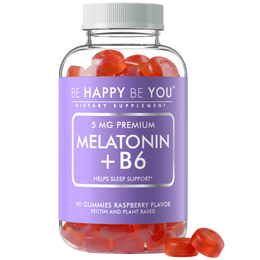
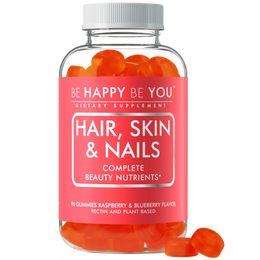
Every gummy we make uses a pectin base with no gelatin, no beeswax and no carmine. Every gummy except the Collagen is vegan, and the full vegan lineup is at our vegan gummy collection. If you want to see the ingredient basics across the line before you buy, our pectin-based lineup is a good place to start, and our Collagen gummy page states its bovine sourcing directly. We do not hold a third-party vegan certification on any SKU. What you see above is our own ingredient data, checked against the label.
Yes. Pectin is a fiber pulled from fruit, usually citrus peel, apple pomace, or beet pulp, using hot dilute acid. There is no animal step anywhere in how the FDA describes it being made. It is the plant-based swap for gelatin in a gummy, which is why nearly every vegan gummy brand uses it as the base.
Yes, always. The FDA defines gelatin as a product obtained by partially breaking down collagen from the hides, connective tissue, and bones of cattle and swine. There is no plant version of gelatin. Any gummy that lists gelatin as an ingredient is not vegan, no matter what else is in the formula.
Yes. The base being pectin only covers the gel itself. Coatings like beeswax, colorants like carmine, and the source of a vitamin like D3 can all bring animal material into an otherwise plant-based gummy. A truly vegan gummy needs a plant base and a clean ingredient list around it.
Usually not. The FDA describes vitamin D3, or cholecalciferol, as coming from fish liver oil or being manufactured from cholesterol, both animal sources. Vitamin D2, or ergocalciferol, is made from irradiated fungal ergosterol instead, so it is the form most vegan supplements use in place of D3.
No. It uses bovine collagen, which comes from cattle, so it cannot be vegan regardless of the pectin base underneath it. The product page says so.
Carmine, sometimes listed as cochineal extract, is a red colorant made by extracting it from a scale insect called cochineal. It is a common natural colorant in candy and gummies, but it is animal-derived, so its presence on a label rules out a vegan claim.
*These statements have not been evaluated by the Food and Drug Administration. This product is not intended to diagnose, treat, cure, or prevent any disease.
One useful read at a time on gummies, ingredients, and routines that stick. No spam, unsubscribe whenever.
How is your visit going so far?
What best describes it?
Thank you. That helps.