


Beauty
How Long Does Biotin Take to Work?
The realistic timeline for biotin, hair, and nails: why it takes months not days, how much you need, and one safety note to tell...

Most collagen mistakes are not exotic. They are the ordinary ones: quitting too early, forgetting the one nutrient your body needs to use collagen, and buying the wrong type for the goal. One more fact belongs up front: our collagen comes from cattle, so it is bovine, and that means it is not vegan. We make a collagen gummy, so we have answered these by email more times than we can count. Here is the short list of what to skip, and when to take it.
Quick facts
Collagen is a slow build. Nothing about it happens in a fortnight. In a 2019 systematic review of collagen supplementation trials published in the Journal of Drugs in Dermatology, the trials that showed skin changes ran 8 to 24 weeks, at daily doses of 2.5 to 10 grams of collagen hydrolysate. Nails take longer still. In a separate 24-week trial, 25 people with brittle nails took 2.5 grams a day of a branded collagen peptide, and researchers reported a 12% increase in nail growth rate and a 42% decrease in the frequency of broken nails. Those are study doses and study averages, and they describe those trials rather than any gummy. The point to take from them is the clock: months, in every trial.
So if you try collagen for two weeks and quit, you never gave it the kind of window the research used. Treat it as a daily habit rather than something you evaluate in a fortnight.

This is the one most people miss, and it is basic biochemistry. Your body builds its own collagen using enzymes that need vitamin C to work. The NIH Office of Dietary Supplements states it directly: "Vitamin C is required for the biosynthesis of collagen, L-carnitine, and certain neurotransmitters." Without enough vitamin C, that process stalls. The point is making sure your body has the cofactor it needs to do collagen work at all, which is different from "absorbing" a supplement.
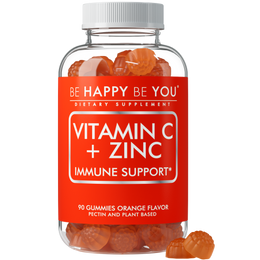
The good news is the bar is low. The recommended daily amount of vitamin C is around 75 to 90 milligrams for most non-pregnant adults, and a normal diet with citrus, peppers, or broccoli usually clears it. If you want to be sure, pairing collagen with our Vitamin C + Zinc gummy is a simple way to be sure you are not short.
Collagen is not one thing. Type I and Type III are the ones your skin, hair, and nails are built from. Type II is a different molecule studied for joints and cartilage, at a much smaller dose. A skin-and-nails collagen is not a joint product, and a joint collagen is not a skin product. If you bought one expecting the other's job, the mismatch is the problem.
Timing is the part people overthink. There is no strong evidence that morning versus night, or empty stomach versus with food, changes results for skin-and-nails collagen. Most trials simply had people take it once a day with a meal. So the best time is the time you will remember. Consistency is the lever here.
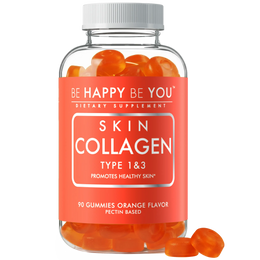
A word on ours, because you deserve it before you buy. Our Collagen gummy has 100 milligrams of bovine Type I and III collagen per serving, built to be an easy, tasty daily add-on you will keep up with. And because the collagen is bovine-sourced, it is not vegan, and we say so on the label and here.
If you want the fuller version of how we think about collagen for skin, hair, and nails, that is on its own page.
Give collagen a real run of months, make sure you are getting enough vitamin C so your body can use it, buy the type that matches your goal, and take it whenever you will stay consistent. Skip those three mistakes and collagen becomes a quiet daily habit instead of a bottle you abandon in a drawer.
Reviewed on September 4, 2026.
This article is general information, not medical advice. Talk to your healthcare provider before starting any supplement, especially if you are pregnant or nursing, take medication, or have a health condition.
These statements have not been evaluated by the Food and Drug Administration. This product is not intended to diagnose, treat, cure, or prevent any disease.
There is no strong evidence that time of day matters for skin-and-nails collagen. Most studies had people take it once daily with a meal, so the best time is whenever you will stay consistent.
Vitamin C is the useful pairing. Your body needs vitamin C as a cofactor to build its own collagen, so being short on it works against you. A normal diet usually covers the Daily Value, and our Vitamin C + Zinc gummy is a simple backup.
Slowly. The trials that showed skin changes ran 8 to 24 weeks and the nail trial ran 24 weeks, at daily doses well above what a gummy provides. Treat collagen as a slow daily habit and judge it over months.
Collagen has a good safety record and reported side effects are mild. With a daily gummy, the practical risk is skipping days, so the thing to focus on is staying consistent.
No. Our collagen is bovine-sourced, so it is not vegan or vegetarian. The gummy itself uses pectin instead of gelatin, but the collagen ingredient comes from cattle.
It is gradual. People tend to notice skin that feels a little more hydrated and nails that break less, over weeks of daily use rather than days. Judge it over months.
Collagen is generally well tolerated in published trials and reported side effects have been mild. Daily use is how it is normally studied. As with any supplement, check with your healthcare provider if you are pregnant, nursing, take medication or have a health condition.
*These statements have not been evaluated by the Food and Drug Administration. This product is not intended to diagnose, treat, cure, or prevent any disease.
The realistic timeline for biotin, hair, and nails: why it takes months not days, how much you need, and one safety note to tell...
Pectin gummies skip gelatin, the usual halal or kosher concern, but certification covers the whole product. We hold neither. How to check any brand's...
No, gelatin comes from animal collagen in skin, bone and connective tissue. What it's made from, why it isn't vegan, and plant swaps like...
One useful read at a time on gummies, ingredients, and routines that stick. No spam, unsubscribe whenever.
How is your visit going so far?
What best describes it?
Thank you. That helps.