
Gummy Science
Are Gummy Vitamins Halal or Kosher? What Certification Covers
Pectin gummies skip gelatin, the usual halal or kosher concern, but certification covers the whole product. We hold neither. How to check any brand's...

Neither format is automatically stronger. The difference is the number on the label. A single-ingredient ashwagandha capsule commonly publishes 300 mg to 900 mg per serving, and our gummy publishes 40 mg of ashwagandha root extract per serving alongside L-theanine and GABA. So a capsule is the format that carries a big single-ingredient dose, and a gummy like ours is a smaller daily calm blend. The published numbers are in the table below. We make an ashwagandha gummy, and here is the breakdown so you can pick with your eyes open.
Quick facts
An ashwagandha pill is usually a single ingredient. The whole point of that format is to pack a lot of one compound into one capsule, and the milligram figures capsule brands publish are much larger than ours. Capsules are built to carry one large single ingredient dose. Ours is built to be the calm blend you take every day.
A gummy is built around a different idea. Ours is not a single-ingredient megadose, and it is not trying to be. It is a calm blend: ashwagandha working alongside L-theanine and GABA, in a serving made to support relaxation and a balanced response to everyday stress. They are two different philosophies, and the table shows which one each product is built on. The right question is which approach fits what you are after.
Every figure below is transcribed from that brand's own product page on the date shown. Where a brand does not publish the milligram figure in text on its product page, the table says so rather than guessing.
| Product | Serving size | Ashwagandha per serving, as published | Extract name, as published on that page | Source page |
|---|---|---|---|---|
| Be Happy Be You Ashwagandha Gummies (ours) | 2 gummies | 40 mg | Ashwagandha (Withania somnifera) root extract. No branded extract named. | behappybeyou.net |
| Jarrow Formulas Ashwagandha 300 mg | 1 capsule | 300 mg | Ashwagandha Extract (Withania somnifera) (Root). The page names KSM-66. | jarrow.com |
| Nature's Way Ashwagandha | 2 capsules | 500 mg | Ashwagandha (Sensoril) (root, leaf) Extract. The page names Sensoril. | naturesway.com |
| Swanson Full Spectrum Ashwagandha 450 mg | 2 vegan capsules | 900 mg | Ashwagandha (Withania somnifera) (root). Whole root, listed with no extract and no branded extract named. | swansonvitamins.com |
| Gaia Herbs Ashwagandha Root | 1 capsule, 2 times daily | Not published on the brand's product page | "Proprietary Extract Blend." Milligram figure published only in the panel image, not in page text. | gaiaherbs.com |
Label data checked on September 4, 2026. We sell one of the products in this table. Read the numbers before you read our opinion. If a figure here is wrong or a brand has changed its label, write to team@behappybeyou.net and we will correct it.
Our 40 mg is a deliberately smaller ashwagandha figure than the single ingredient capsules in that table, because ours is a blend built for daily use rather than a one ingredient megadose. We print the number on the product page instead of leaving it to a panel image.
When we designed this, we did not want to hand you a pile of one ingredient and call it a day. We wanted something that supports everyday calm from a few gentle angles at once. Ashwagandha is an adaptogen, the traditional idea being support for a balanced response to daily stress. L-theanine is the calm-but-clear compound people know from tea. GABA rounds it out. Several soft levers working together, in a serving built for daily use, is a deliberate choice.
It is also why the format matters. This is the kind of thing you are meant to take every day, and the calm blend is built to make that easy and pleasant rather than a chore.
Here is where a gummy pulls ahead: you will take it. The best supplement in the world does nothing sitting in a bottle you have stopped opening. The biggest real-world factor is simple: whether you keep taking it, and for a lot of people a gummy they enjoy is the difference between a daily habit and a forgotten New Year's resolution.
Ours tastes like apple, it is one easy serving, there is nothing to swallow, and it is vegan and pectin-based rather than gelatin. None of that is a small detail. For a supplement whose whole job depends on daily consistency, the format that keeps you consistent is doing real work.
There is no clinically required time of day. Take it whenever you will be consistent. Some people take it in the morning as part of a routine, others in the evening to wind down. Take it with a little food if your stomach is sensitive, which is good advice for most supplements. On how long to stay on it, the National Center for Complementary and Integrative Health at NIH is careful, and worth reading in its own words: "Ashwagandha may be safe when taken in the short term (up to 3 months). There is not enough information to allow conclusions about its long-term safety to be reached." That is a good reason to treat it as something you revisit with your own doctor rather than take forever on autopilot.
Ashwagandha is not right for everyone, and the clearest public summary is NCCIH's. On the liver, that page says it directly: "Although it is rare, there have been a number of cases that link liver injury to ashwagandha supplements." The same page states that "Ashwagandha should be avoided during pregnancy and should not be used while breastfeeding," and that "Ashwagandha is not recommended for people who are about to have surgery, or for those who have autoimmune or thyroid disorders." It also lists possible interactions with medications for diabetes and high blood pressure, immunosuppressants, sedatives, anticonvulsants, and thyroid hormone medications.
So: if any of that describes you, or you are under 18, talk to your healthcare provider before taking it rather than taking our word for anything. And if you ever notice signs of liver trouble, such as unusual tiredness, stomach pain, dark urine, or yellowing of the skin or eyes, stop and check with a doctor. A real ingredient is worth treating with a little care.
Gummy or pill comes down to what you want from it. If a large single-ingredient milligram figure is the point, the table above shows which capsules publish one. If you want a good-tasting daily habit that supports everyday calm, and you know consistency is what makes a supplement worth taking, that is exactly what we built our Ashwagandha calm gummy to be. You can see how we approach everyday calm and balance, or browse our Be Calm collection for the wider set.
Reviewed on September 4, 2026.
This article is general information, not medical advice. Talk to your healthcare provider before starting any supplement, especially if you are pregnant or nursing, take medication, or have a health condition.
These statements have not been evaluated by the Food and Drug Administration. This product is not intended to diagnose, treat, cure, or prevent any disease.
They are built for different things. A single-ingredient pill is designed to pack a lot of one compound into a capsule. A gummy like ours is a calm blend built for an easy daily habit, pairing ashwagandha with L-theanine and GABA. The best choice is the one you will take every day, which for many people is the gummy.
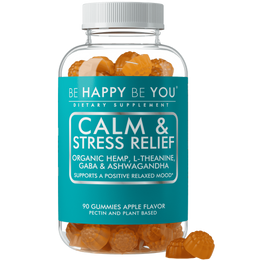
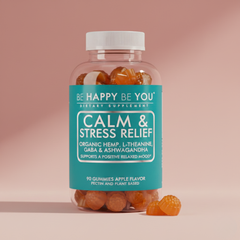
Each serving pairs ashwagandha root extract with L-theanine and GABA, plus organic hemp seed oil, in an apple-flavored, vegan, pectin-based gummy. It is a calm blend designed for everyday relaxation and a balanced response to daily stress.
There is no clinically required time. Take it whenever you will be most consistent, with a little food if your stomach is sensitive. Some prefer morning, others evening to wind down.
There is no established timeline for a 40 mg daily serving. Treat it as a daily habit and give it a fair run rather than judging it after a few days.
Yes. It uses pectin rather than gelatin and is apple flavored.
The National Center for Complementary and Integrative Health advises avoiding ashwagandha during pregnancy and while breastfeeding, and says it is not recommended before surgery or for people with autoimmune or thyroid disorders. It also notes possible interactions with several medication classes. Talk to your doctor first, and stop and see a doctor if you notice signs of liver trouble such as unusual tiredness, stomach pain, dark urine, or yellowing of the skin or eyes.
*These statements have not been evaluated by the Food and Drug Administration. This product is not intended to diagnose, treat, cure, or prevent any disease.
One useful read at a time on gummies, ingredients, and routines that stick. No spam, unsubscribe whenever.
How is your visit going so far?
What best describes it?
Thank you. That helps.